

To understand a problem is to solve it
Seeing the problem before solving it The most common mistake we make is to avoid the problem itself. As soon as we see it, we start looking for a solution. It's like if the problem stays there for even a second, it will swallow us up. That's why we want to find a quick answer. A plan. One step.…
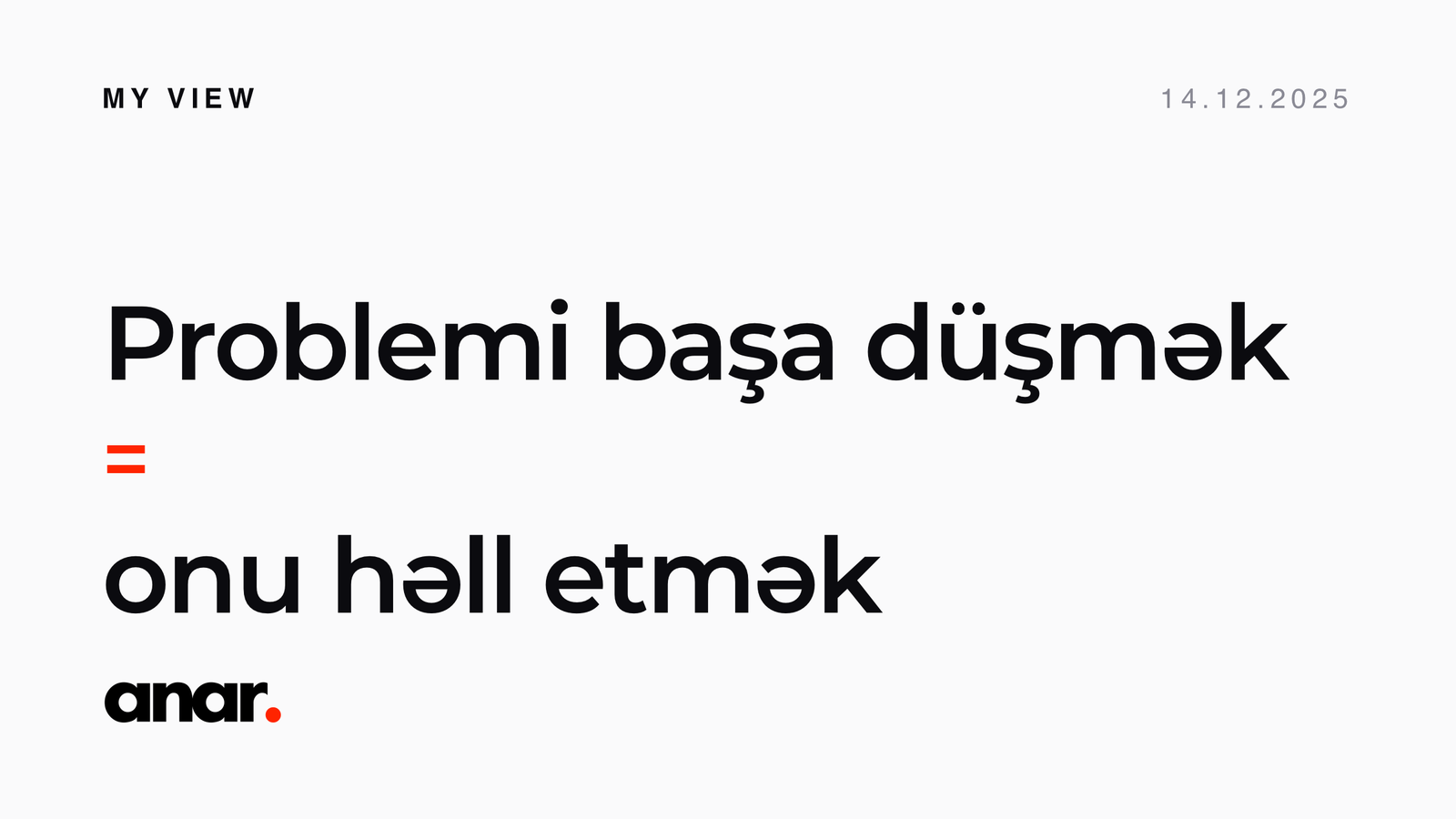
Seeing a problem before you solve it
The most common mistake we make is to avoid the problem itself. As soon as we see it, we start looking for a solution. It's like if the problem stays there for even a second, it will swallow us up. That's why we want to find a quick answer. A plan. One step. One correction.
But often this haste does not eliminate the problem, it just does changes its place.
Seeing the problem seems passive. Makes it feel like it's doing nothing. In this period, "doing nothing" is read as weakness. Everyone is on the move. Everyone reacts. Optimizes everyone. Just seeing the problem is like quitting the game.
However, the real game begins there.
Seeing a problem means you're not making a decision yet. You're not taking a stand yet. You are not on someone's side yet. You just look. This is something that very few people can do. Because you need calmness to look. Stillness creates anxiety.
People want to solve the problem quickly because the problem feeling creates. Tension. Anxiety. Uncertainty. The solution reduces these feelings. We are relieved when we find a solution. But comfort is not always in the right place.
Sometimes a problem should not be solved. First must be understood.
Because what we often see is not the problem, but its result. It is a sign on the surface. But we fix the symptom, the cause remains. And after a while, the same problem returns in a different form. In a more tedious way.
Seeing the problem as a single point rather than within the context is to see. When did it start? Who was affected? What has changed? At what point did we accept it as "normal"? Without answers to these questions, the solution found is often merely cosmetic.
Design thinking is not a method here, position appears as He says don't rush. Stay with it for a while before fixing the problem. Don't worry. Try to understand. Feel it. Ask a question.
It's not easy. Because looking at the problem sometimes means looking at one's own mistakes. To the system you created. To your decision. To the question that you did not ask in time. That's why many people don't want to see the problem. Because it brings responsibility back.
Finding a solution seems heroic. Seeing the problem is like remaining silent. But silence is often braver. A solution found without seeing the problem often makes the system harder. A new rule is coming. New process. New dimension. However, the problem is sometimes the system itself. And it is impossible to fix the system while staying in the system.
To see the problem is also to see the person. Because problems are rarely just technical. They are intertwined with behavior, expectation, fear, pressure. The solution found without seeing these layers is exhausting.
And there is this truth: sometimes the problem is not solved, is transformed. You don't make it disappear. You learn to work with it. And this is possible only when you really see it.
It takes time to see the problem. It requires patience. And sometimes it requires accepting the unanswered. But every solution that does not pass this stage remains incomplete.
Perhaps the biggest mistake is this: Seeing the problem as an enemy.
However, the problem is often the warning. It says something is not working. He says something has to change. But we find a quick solution to drown out this sound. And the sound is silent for a while. Then it returns higher.
Seeing a problem isn't loving it, it's listening to it. And sometimes the best course of action is to do nothing look a little more.
Follow me on Instagram
Short notes, practical examples and daily digital strategy ideas.


I'm Anar Rustamli - a strategist, entrepreneur, and AI adoption leader working at the edge of growth, technology, and human thinking. Since 2016, my work has focused on helping businesses evolve in a rapidly changing digital landscape. I design growth systems, AI-powered workflows, and strategic frameworks that align performance with purpose. I believe real growth happens when strategy, data, and human insight work together - and my mission is to help businesses adopt AI in a way that strengthens both their results and their identity.

